Alongside my screen-based UX and creative coding work, I have a hands-on fabrication practice: laser cutting, 3D printing, CNC and 3D scanning, trained during my BA in Industrial and Product Design and used throughout my MSc projects and exhibition work at UAL. This page pulls that thread together across projects, rather than living inside any single case study.
Fabrication shows up differently on almost every project I've built: a laser-cut turntable mechanism on one, a laser-cut topography model on another, a 3D-printed weatherproof case on a third. Rather than repeat that detail piecemeal inside each project page, this page collects it in one place, alongside a standalone fabrication pipeline and museography work from a UAL exhibition.
FABRICATION ACROSS PROJECTS
Fabrication work already lives inside two of my installation projects:
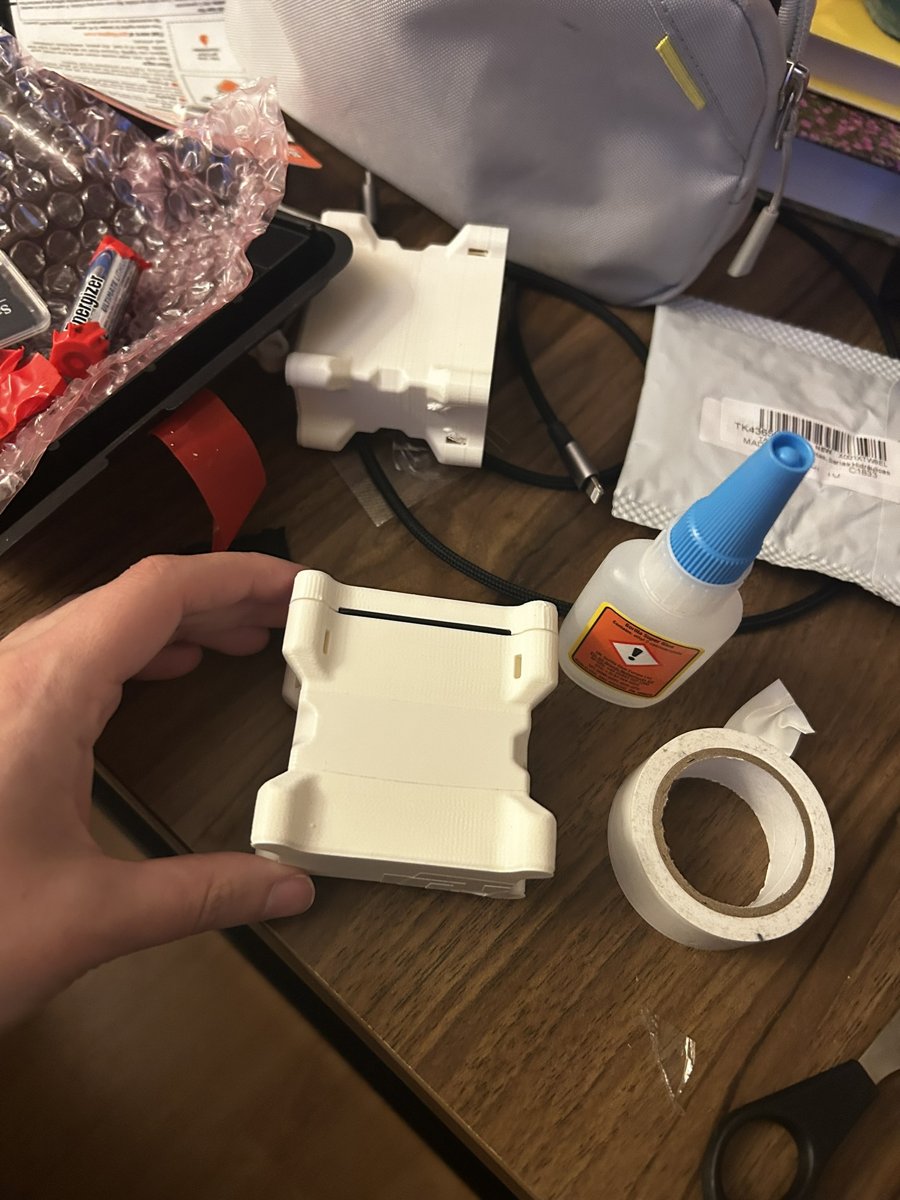
Umwelt: The Cube — I designed, laser-cut and assembled the physical turntable and bearing mechanism the cube sits in, prototyped first in cardboard and marbles, then rebuilt in acrylic with metal bearings. I also 3D-printed and weatherproofed a case for an AudioMoth acoustic recorder used to field-record original birdsong, and built the Arduino rotary-encoder circuit that reads the cube's rotation into Unity and TouchDesigner in real time.
Sprint 2: Emergence — Drawing Cities — my teammate Elif modelled and laser-cut a cardboard topography model of Rocinha, Rio de Janeiro, which I worked with directly as the physical surface for a live projection-mapped interaction layer I built in TouchDesigner.
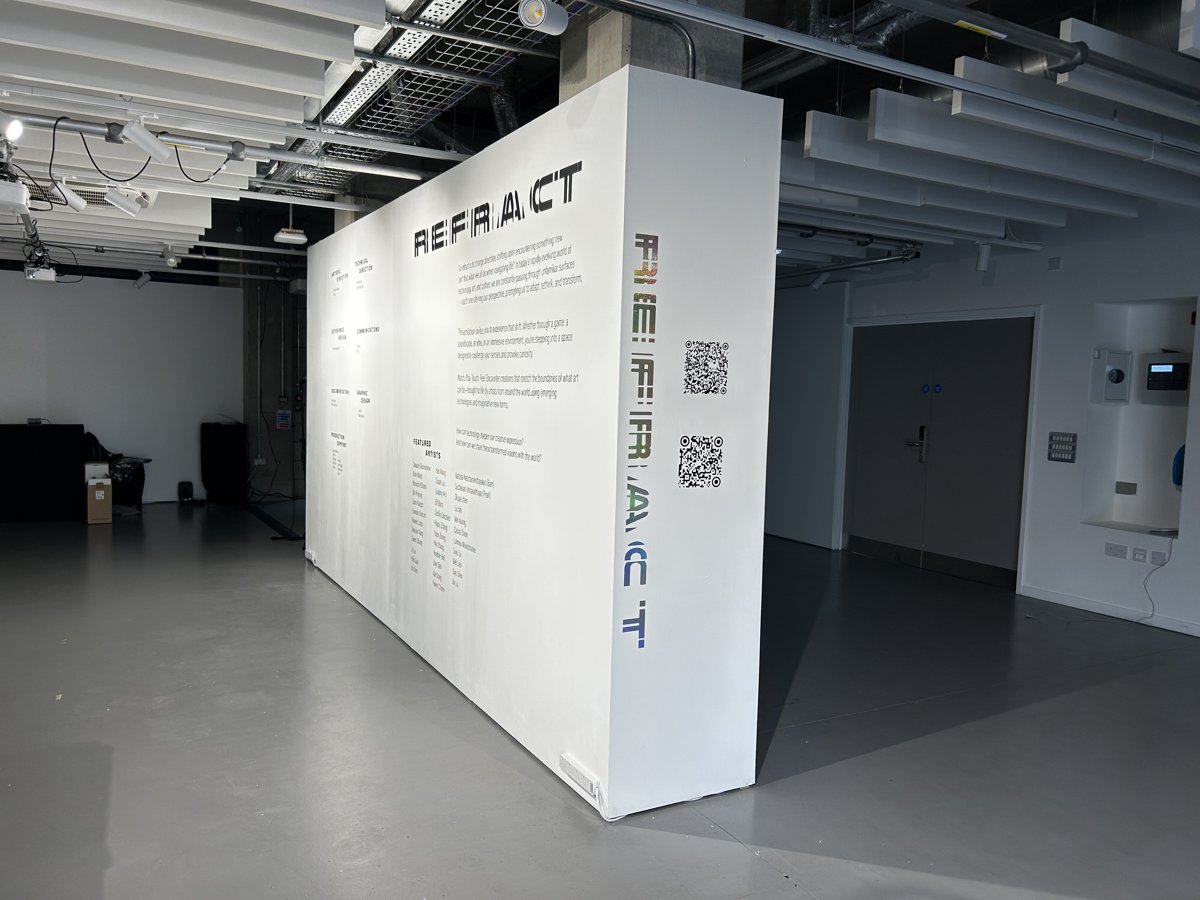
REFRACT, 2025 CCI Spring Exhibition — I worked as Experience Designer on the Organizing Committee, coordinating museography, floor plan and visitor flow directly with the Technical Direction and Production Support teams, translating creative intent into a physical, buildable installation.
FABRICATION PIPELINE (LASER CUT, SCAN, PRINT)
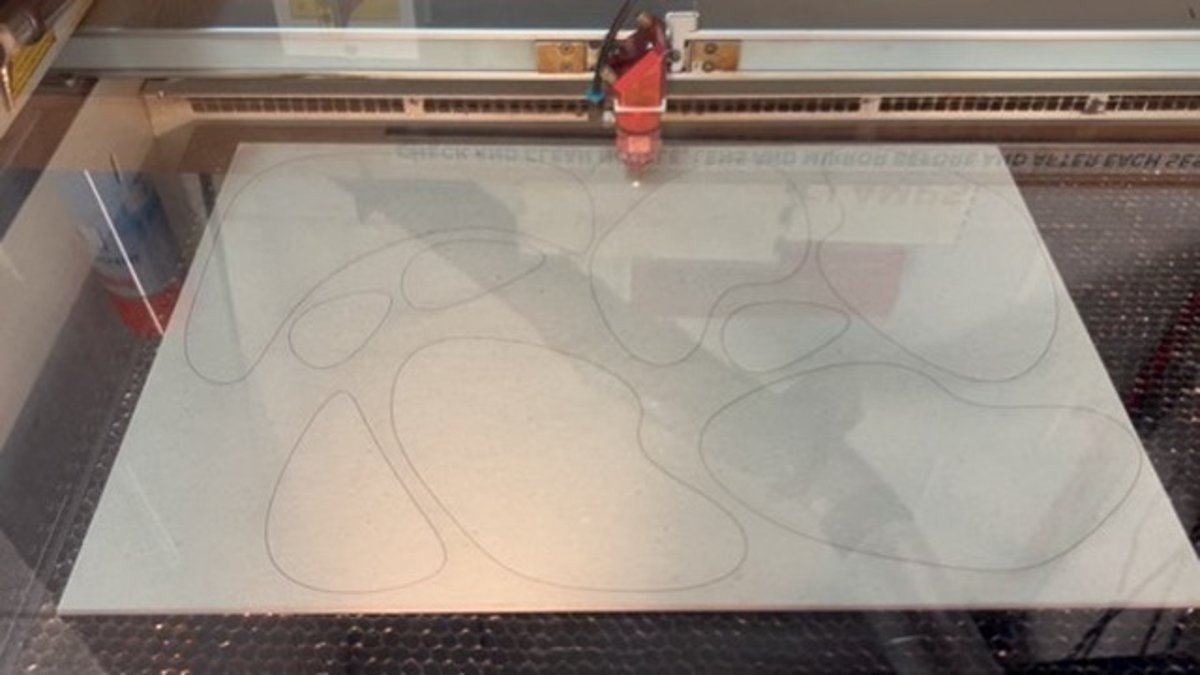
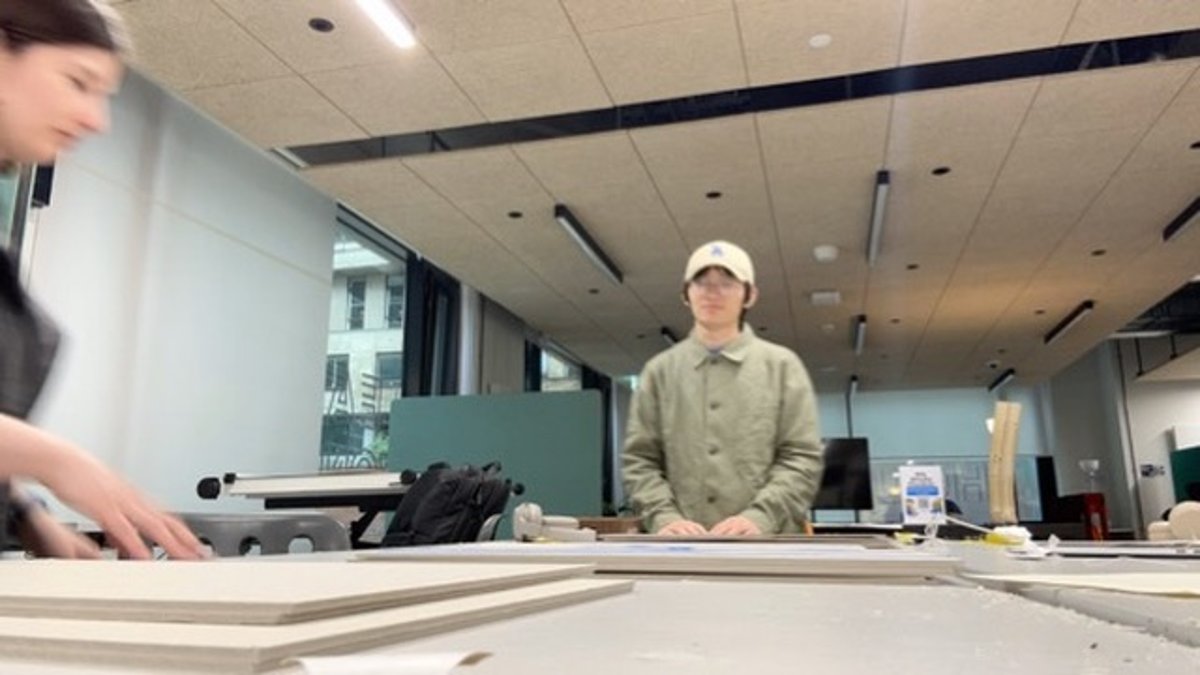
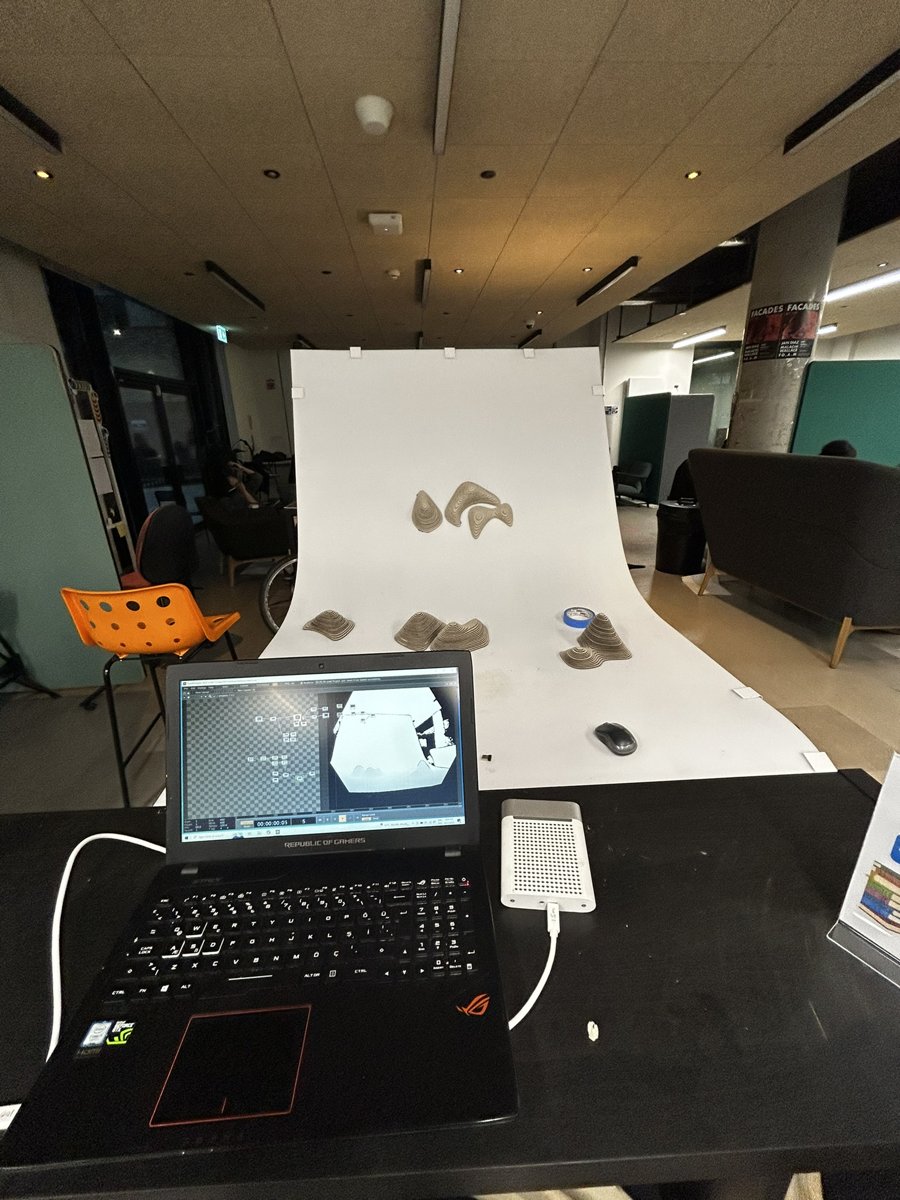
Outside of any single project, I use fabrication as a standalone research tool. During my MSc, I ran a set of topographic forms through a full digital-to-physical-to-digital pipeline: modelled digitally, laser cut as layered plates to build up physical contour models, then 3D scanned back into a digital environment using a photogrammetry rig I built myself, lighting and camera calibration included.

3D PRINTING & PHYSICAL COMPUTING
I also work with 3D printing and physical computing directly: printing and assembling hardware enclosures, working through fit and tolerance problems by hand, and wiring and mounting sensor-based Arduino prototypes.