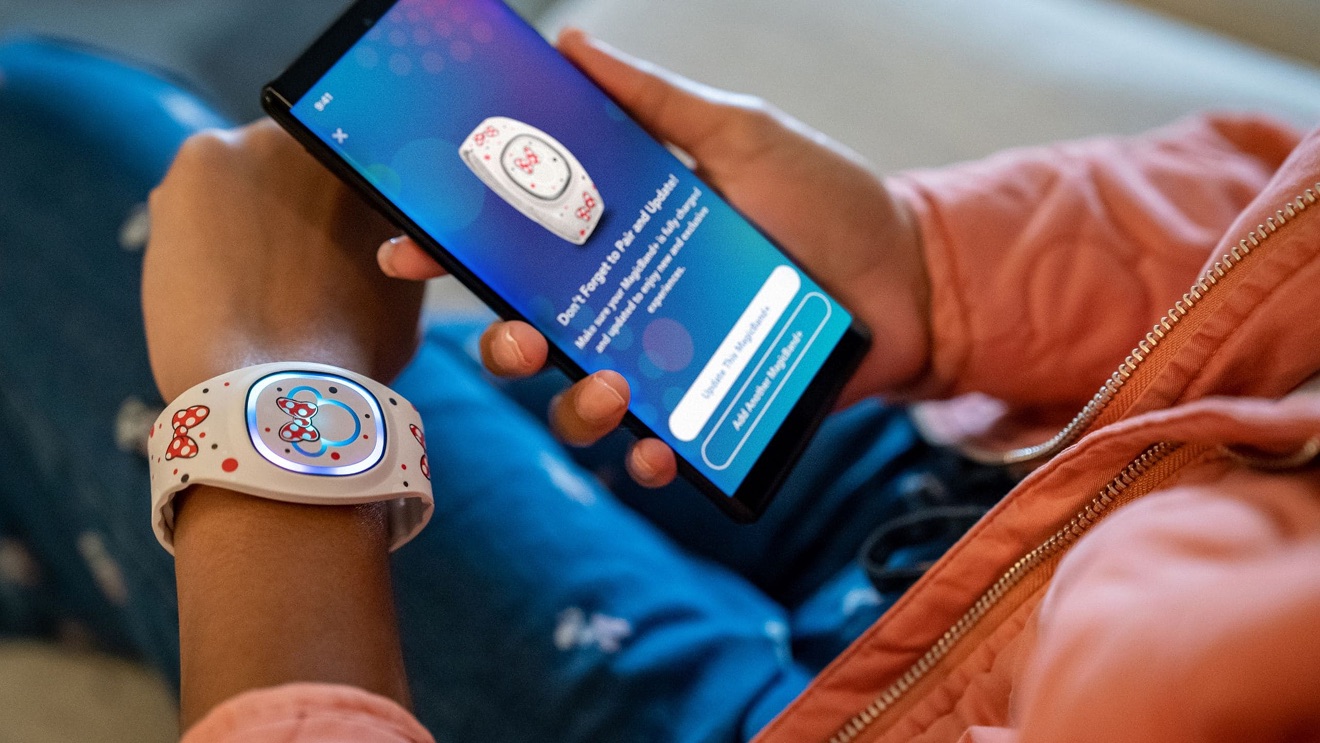
MagicBands are how Disney World guests get into their resort room — tap the band, door unlocks. The problem: for a meaningful slice of arrivals, that tap doesn't work, and guests found out the hard way, standing outside their room at the end of a travel day. Self-Encode lets guests fix this themselves, from their phone, in the My Disney Experience app — no front desk trip required.
I co-led design and usability testing on this feature with a senior product designer — working through entry points, flow, and edge-case copy, then validating it with guests across three research phases: planning test goals, testing prototype questions, and synthesizing results for stakeholders.
Room access for MagicBands depends on media successfully reaching the door lock during setup — a process guests never see and have no reason to think about, until it fails. Two conditions made failure more likely: the room had more than 36 pieces of encoded media (bands, cards, etc.) linked to it, or some of that media didn't reach the door lock, even though it had synced elsewhere in the system.
Both are backend conditions with no guest-facing signal. Without an intervention, the first sign of trouble is a locked door.

Entry points. Rather than a standalone settings menu buried in the app, self-encode messaging hooks into the "Room Ready" notification guests already expect on arrival day — the same moment they're checking their room number.
Targeting, not spam. The messaging is only proactively surfaced to reservations that match the at-risk conditions, keeping it from becoming noise for the ~87% of arrivals where nothing was wrong.
Copy that carries the brand. Functional security-style copy would have felt out of place in a Disney product. We iterated toward something warmer while staying precise: "We detected your MagicBands need some extra pixie dust to open your door — apply it in one touch with your phone."
The core interaction — open scanner, hold MagicBand near the phone, done — was benchmarked against a similar self-service pattern already live at Disney's Animal Kingdom Villas – Kidani Village, adapting it for the broader mobile use case rather than inventing a new pattern from scratch.
- Guest has bands linked, but none are encoded for room access yet.
- Guest has bands linked, and some are encoded but others aren't.
- Guest has no room access on any linked band.
- Guests under 18 calling for help need a parent or guardian present — the fallback "call the front desk" path accounts for this.
Testing moved through three passes: planning & test goals, prototype & test questions, and results synthesis — rolling findings into a deck that shaped the final copy and flow before build.